Use cases tagged with "Biogeography"
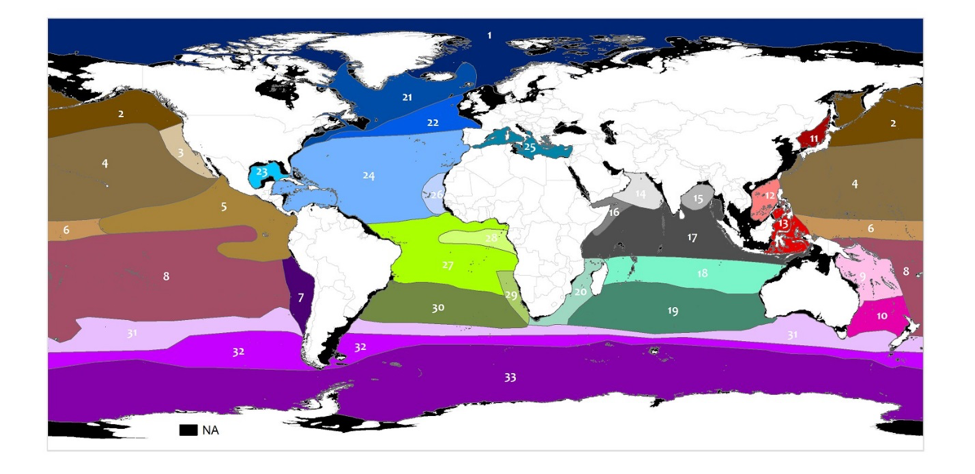
Illuminating the Twilight Zone - expert panel maps the world's mesopelagic zone
A new study using data from OBIS identified 33 mesopelagic ecoregions of the world’s oceans. This is a first step towards a dynamic mesopelagic biogeography, which forms an important baseline to assess human impacts on the mesopelagic, or "twilight" zone; ...
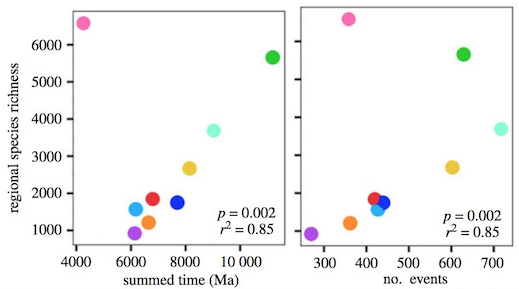
High species richness in the Central Indo-Pacific explained by time and many colonization events
In a study published in Proceedings of the Royal Society B in October 2018, Miller et al. explored how the timing and rates of fundamental evolutionary processes—speciation, extinction, and colonization events have jointly shaped differences in regional species richness in ...
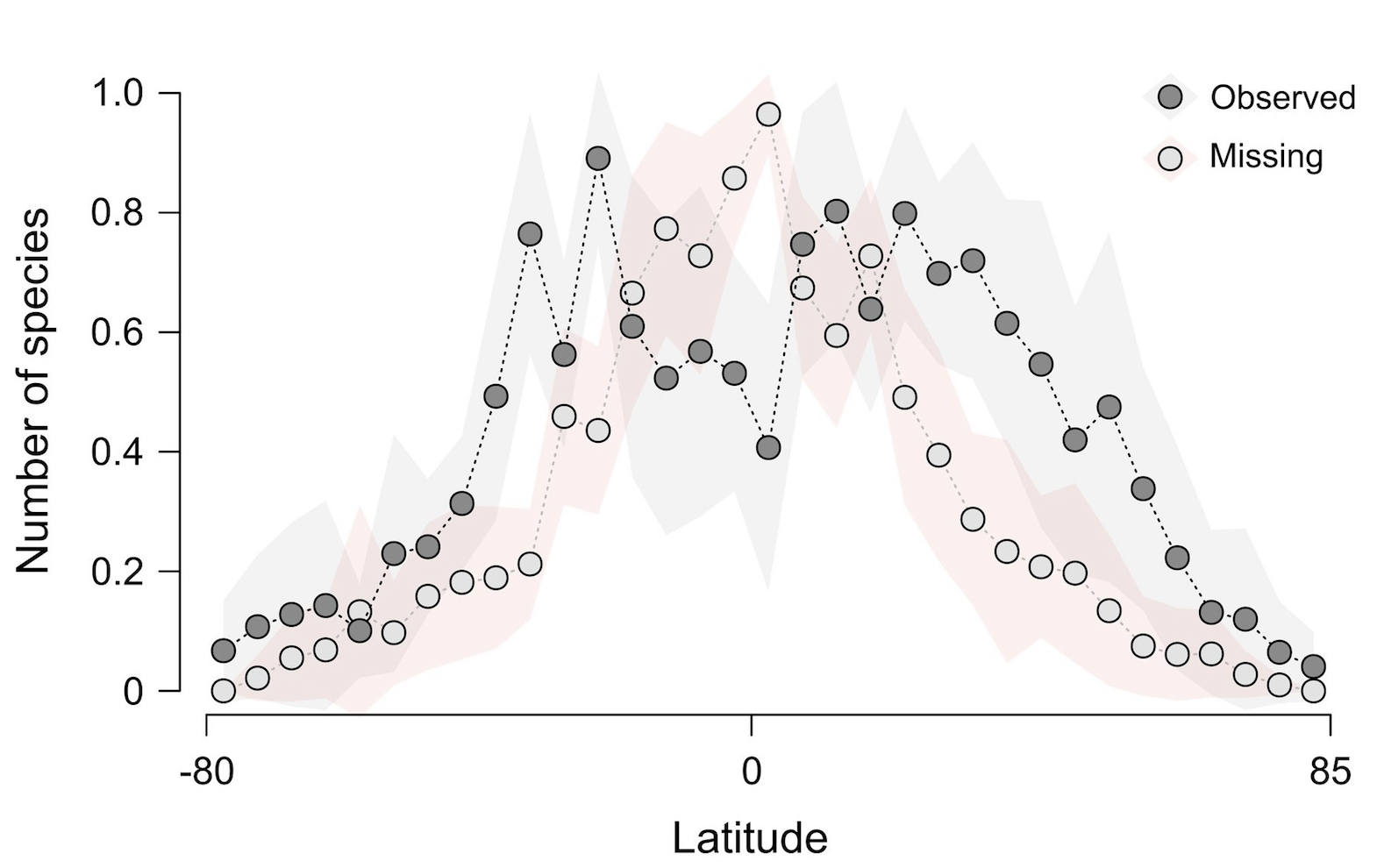
Mapping knowledge gaps in marine diversity reveals a latitudinal gradient of missing species richness
In a study published in Nature Communications in November 2018, researchers from Federal University of Goiás explored global spatial patterns in species richness by analyzing more than 3 million occurrence records of almost 35,000 marine species from OBIS and other ...
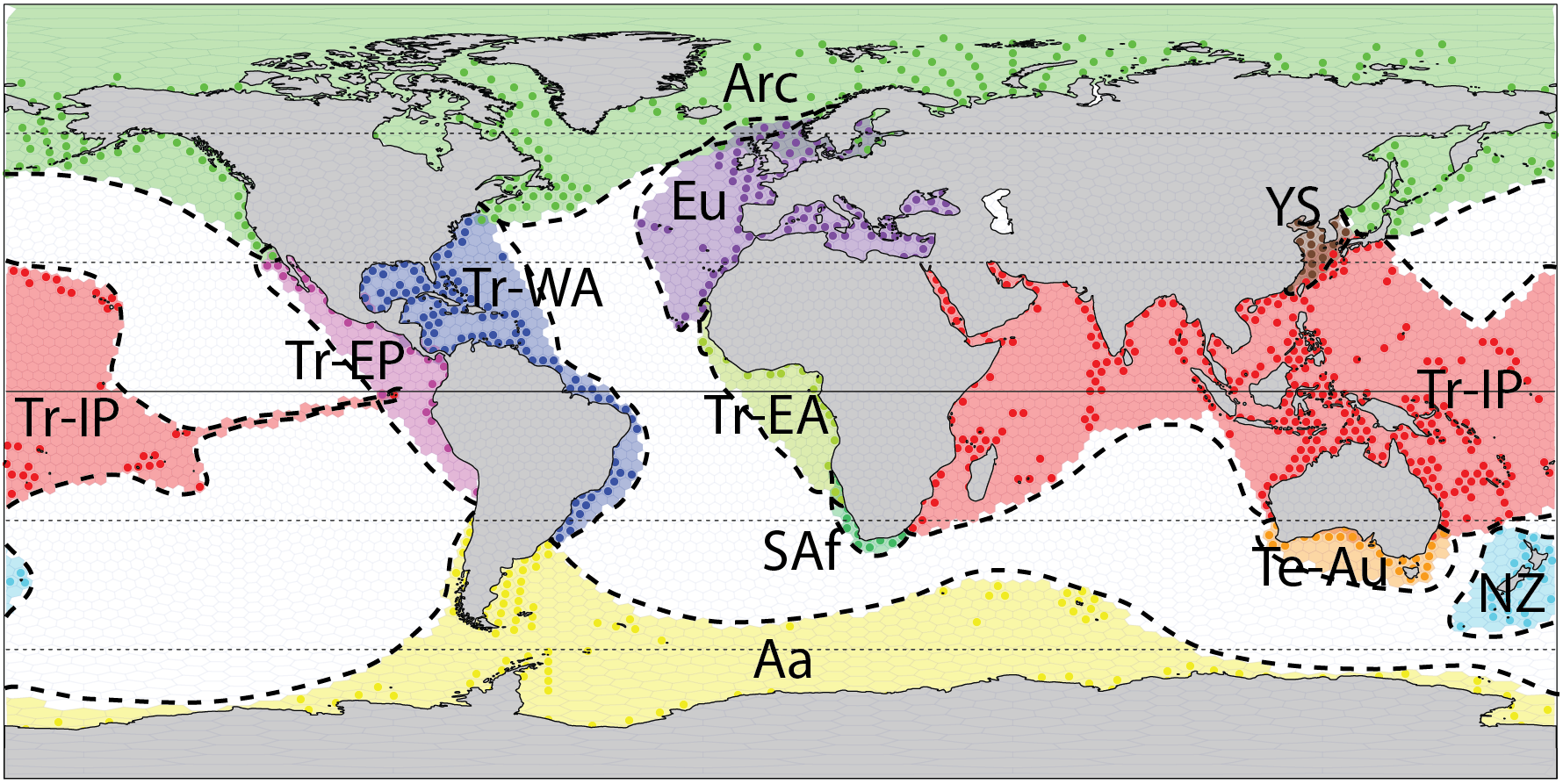
Coastal benthic biogeographic regions are stable across the millennia
A new study published in Global Ecology and Biogeography, using recent occurrence data from the Ocean Biogeographic Information System (OBIS) and fossil data from the Paleobiology Database, showed that modern and the near past global ecosystem feature highly similar biogeographic ...
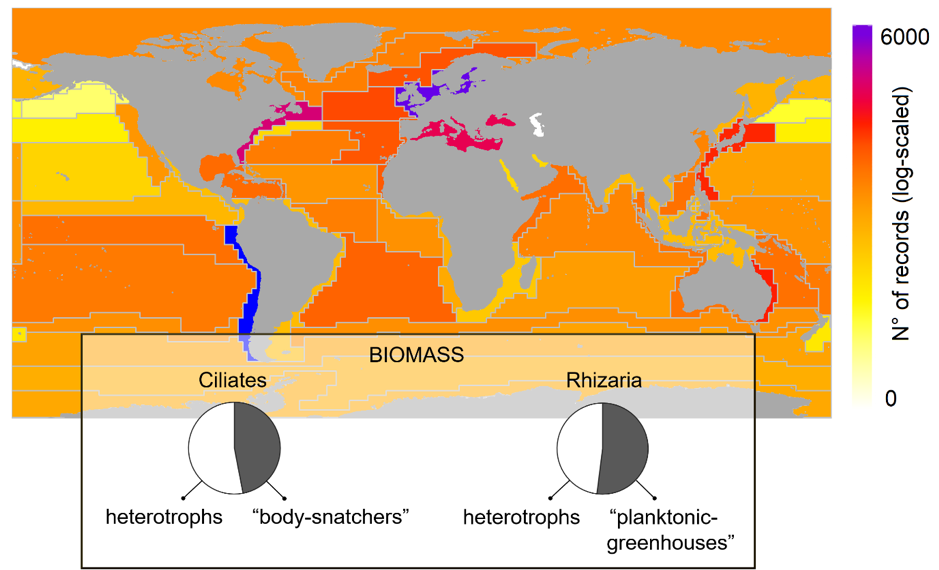
Microscopic “body-snatchers” and “planktonic-greenhouses” are ubiquitous with contrasting biogeographies and abundance in our oceans
A study published in Proceedings of the Royal Society B using data from OBIS investigated for the first time the biogeography of mixotrophs, planktonic species which acquire phototrophic capability from their prey. The study shows that “body-snatchers”, (e.g., ciliates, which ...
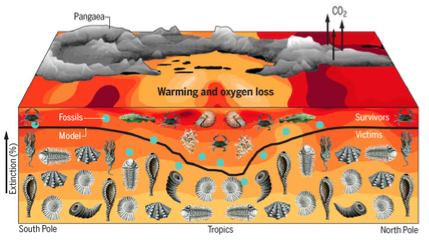
The great dying at the end of the Permian linked to ocean warming and oxygen loss
A study published in Science using historical data of ocean warming and oxygen loss, combined with species traits and occurrence data from OBIS revealed patterns of habitat loss and extinction at the end of the Permian period.
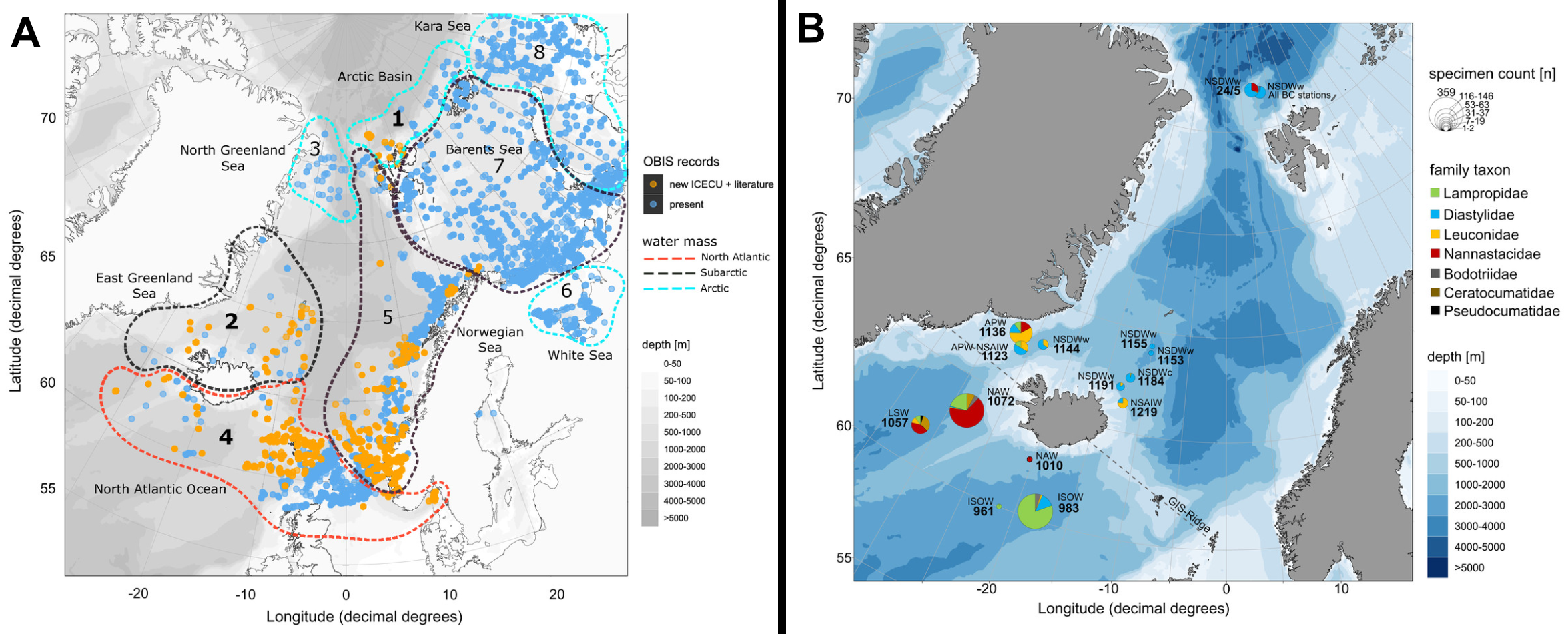
Cumacea (Peracarida) from the deep Nordic Seas
This study compiled and analysed occurrence records of Cumacea from various courses and expeditions, including those available in OBIS, to provide insight into the diversity and distribution of the group from the deep North Atlantic to the Arctic Ocean. The ...